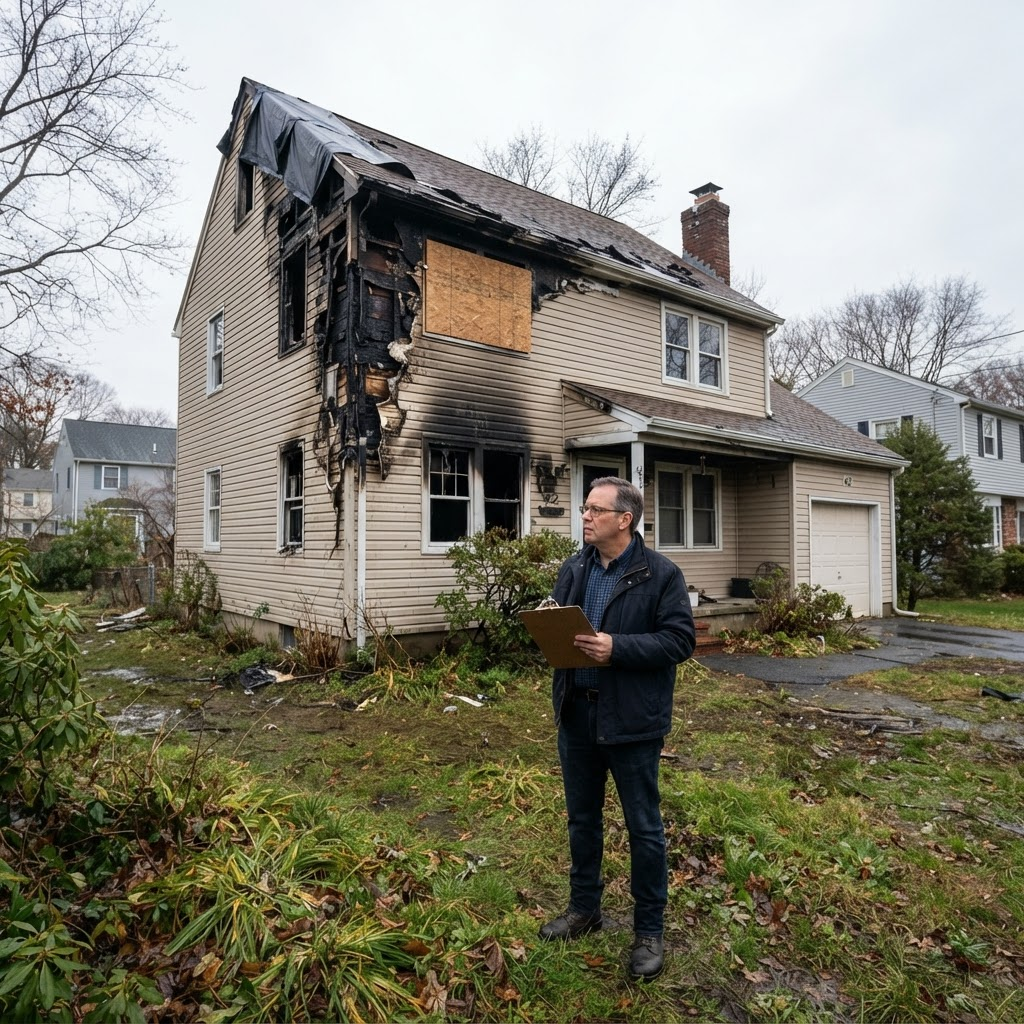
After a house fire, the first priorities are safety, temporary housing, and the insurance claim. Once the immediate crisis passes, many homeowners face a second difficult question: should the property be repaired, demolished, or sold in its current condition?
A fire-damaged house can usually be sold. The challenge is determining the true condition, understanding the insurance proceeds, and finding a buyer who can handle the repair risk.
Do Not Enter Until the Property Is Cleared
Fire can weaken framing, roofing, floors, stairs, and electrical systems. Smoke, soot, water, mold, and damaged materials can also create health risks. Follow instructions from the fire department, insurance company, and qualified inspectors before entering or removing belongings.
Understand What the Insurance Claim Covers
The insurance policy may address the structure, personal belongings, debris removal, temporary living expenses, and code-upgrade requirements. The payment process can be complicated when a mortgage lender is named on the check or when work must be inspected before funds are released.
Before accepting a property offer, ask the insurance adjuster and mortgage servicer how a sale would affect any remaining claim. Do not assume that insurance proceeds automatically transfer to a buyer or that every payment can be kept after the sale.
Get a Clear Picture of the Damage
- Fire department or incident report
- Insurance adjuster estimate and claim correspondence
- Structural engineer or contractor assessment, if available
- Photos taken before cleanup or demolition
- Information about water, smoke, roof, electrical, HVAC, and foundation damage
- Any city order requiring the property to be secured, repaired, or demolished
A buyer will price both the visible damage and the unknown risk. Better documentation can reduce uncertainty and make the offer easier to explain.
Option 1: Repair and Sell at Retail
Rebuilding may create the highest sale price if the location is strong and insurance covers most of the work. However, a major restoration can require architects, permits, specialized contractors, inspections, mortgage-company approvals, and months of carrying costs.
Owners should compare the likely finished value with the deductible, uncovered work, temporary housing, mortgage payments, taxes, insurance, and the time required to manage the project.
Option 2: Sell the Property As-Is
Selling as-is means the buyer accepts the property in its current condition, subject to the contract and required disclosures. A traditional listing may attract builders and investors, but severely damaged properties often cannot qualify for standard mortgage financing. Our guide to selling a house as-is explains what that process looks like.
A direct cash buyer can evaluate the structure, obtain repair bids, and close without waiting for a lender to approve the condition. This can be helpful when the owner lives out of state, does not want to oversee construction, or needs to stop ongoing expenses.
How a Fire-Damaged Home Offer Is Calculated
An investor generally starts with the property's expected value after complete repair, then subtracts construction costs, cleanup, permits, financing, holding costs, selling costs, risk, and a reasonable profit. Fire repairs often include a larger contingency because hidden smoke, water, electrical, and structural damage may appear after demolition begins. If you want to weigh the trade-offs, compare a cash offer against a traditional sale.
Questions to Ask Any Buyer
- Are you buying the property directly or assigning the contract to another buyer?
- Is the offer dependent on a later inspection or partner approval?
- Who pays the closing costs and outstanding property charges?
- Can you work with the title company, insurer, and mortgage servicer?
- What happens if demolition or code orders are discovered before closing?
The Bottom Line
You do not have to rebuild a fire-damaged home before selling it. Repairing can make sense when coverage is strong and you have the time to manage construction. Selling as-is can make more sense when speed, certainty, and relief from a complicated project matter more than the maximum possible retail price.
Tell us what happened and share any insurance or inspection documents you have. When you are ready, you can request a no-obligation cash offer and we will review the property as-is.
This article is general information and does not replace advice from your insurer, lender, contractor, attorney, or local building department.
Ready to explore your options?
Get a fair, no-obligation cash offer in 24 hours. No repairs, no fees, no pressure — close on your timeline.
Get My Cash OfferFrequently Asked Questions
Can I sell before the insurance claim is finished?
Possibly, but the policy, mortgage lender, claim status, and purchase contract must be reviewed carefully. Ask the adjuster, lender, title company, and attorney how the sale affects the claim.
Do I need to clean out a burned house before selling?
Not always. Some cash buyers purchase the property with damaged materials and unwanted belongings remaining, provided the site is safe and the contract explains responsibility.
Does fire damage have to be disclosed?
Known fire damage and repairs are commonly material facts. Disclosure rules vary, so follow state law and professional advice.
MVP Capital Homes
Acquisitions Team — helping homeowners sell fast and fairly in any situation.